Cylinder Seal Kits: Rod Seals, Piston Seals and Wipers
A hydraulic-cylinder seal kit is not just a bag of interchangeable rings. Rod seals, piston seals and wipers serve different positions and functions. Knowing the difference helps you ask the right questions about kit contents, cylinder identity and the measurements needed to confirm a replacement.
The KuduParts page identifies boom cylinder seal kit 4438672 and lists Hitachi excavator applications. It does not list the individual seal profiles, quantities, materials or the exact cylinder number. Do not assume that every seal named below is included in that specific kit.
Three seal functions to keep separate
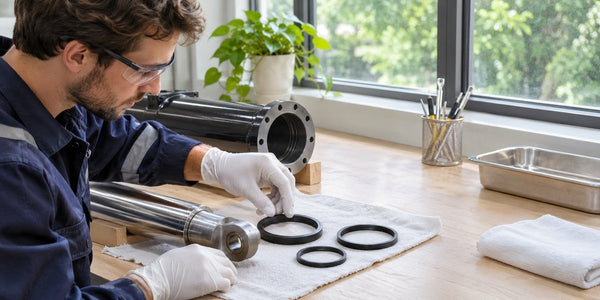
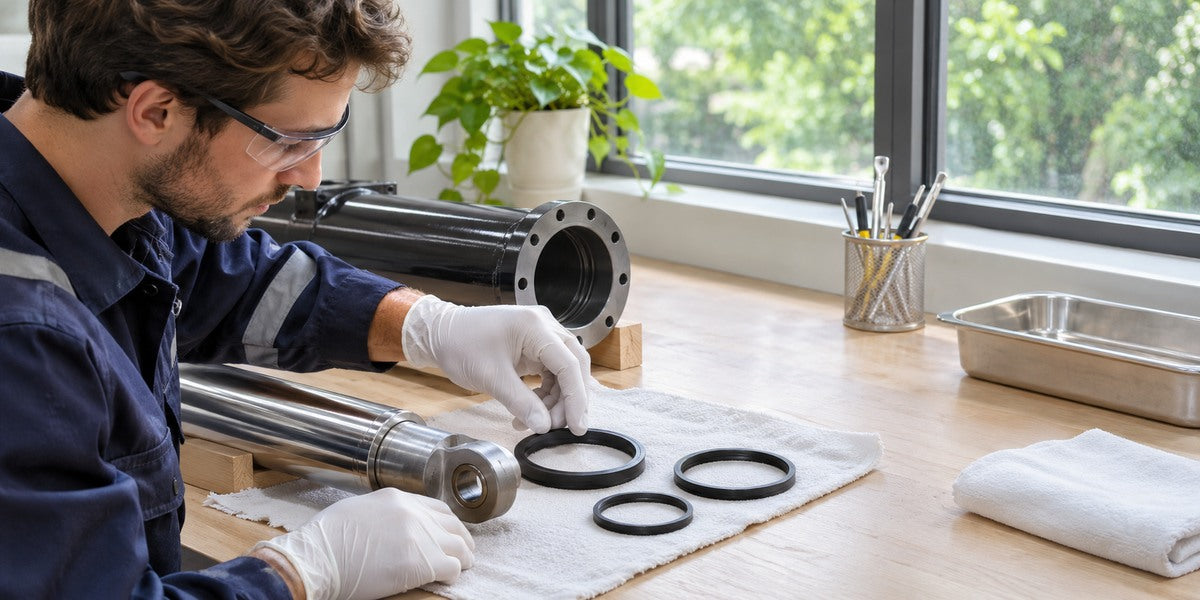
- Rod seal: seals between the moving rod and cylinder head to limit fluid leakage to the outside. Confirm rod diameter, gland arrangement, pressure direction, material and profile.
- Piston seal: seals between the piston and cylinder bore to limit internal bypass across the piston. Confirm bore diameter, single- or double-acting circuit, groove and seal arrangement.
- Wiper / scraper: sits at the rod entrance to remove dirt and moisture as the rod retracts. Confirm gland groove, rod size, environment and specified pairing with the rod seal.
Hallite describes rod seals as the barrier against leakage from the cylinder and wipers as protection against contaminants entering the cylinder. It also describes piston seals as preventing fluid from crossing the piston. These roles are related, but one seal type cannot substitute for another simply because the outside diameter looks similar.
Some cylinder designs also use wear rings or bearings to guide the piston and rod and manage side loads. Those parts may or may not be included in a particular seal kit. Confirm the kit drawing or itemized contents rather than assuming from the term “seal kit.”
Identify the cylinder before choosing a kit
- Record the machine model and serial number, cylinder position and the cylinder’s own identification or part number.
- Use the OEM parts catalog or cylinder drawing to confirm the exact assembly and any serial-range changes.
- Compare the removed seal references or measured rod, bore and groove dimensions with an approved seal specification. A rough outside measurement is not enough to identify a profile.
- Ask for a contents list and material or profile information when those details affect the repair.
Seal material and geometry depend on the fluid, pressure, temperature, speed, surface condition and groove design. Hallite’s catalog includes many profile-specific designs and operating limits; those values are not transferable to an unidentified kit. Use the cylinder manufacturer’s drawing and the seal supplier’s data for the specific application.
Before a repair
Depressurize and secure the machine according to its service manual before opening hydraulic components. Keep the work area and parts clean, protect the rod surface from scratches, and follow the manufacturer’s assembly instructions for orientation and lubrication. If the cylinder number, groove measurements or kit contents cannot be confirmed, stop and request documentation instead of installing a visually similar seal.
Sources: Hallite, Hydraulic Seals (general functions of rod seals, piston seals, wipers and bearings; design-specific limits must come from the selected product data). KuduParts 4438672 listing (listed part number and applications; contents/materials are not specified there).